
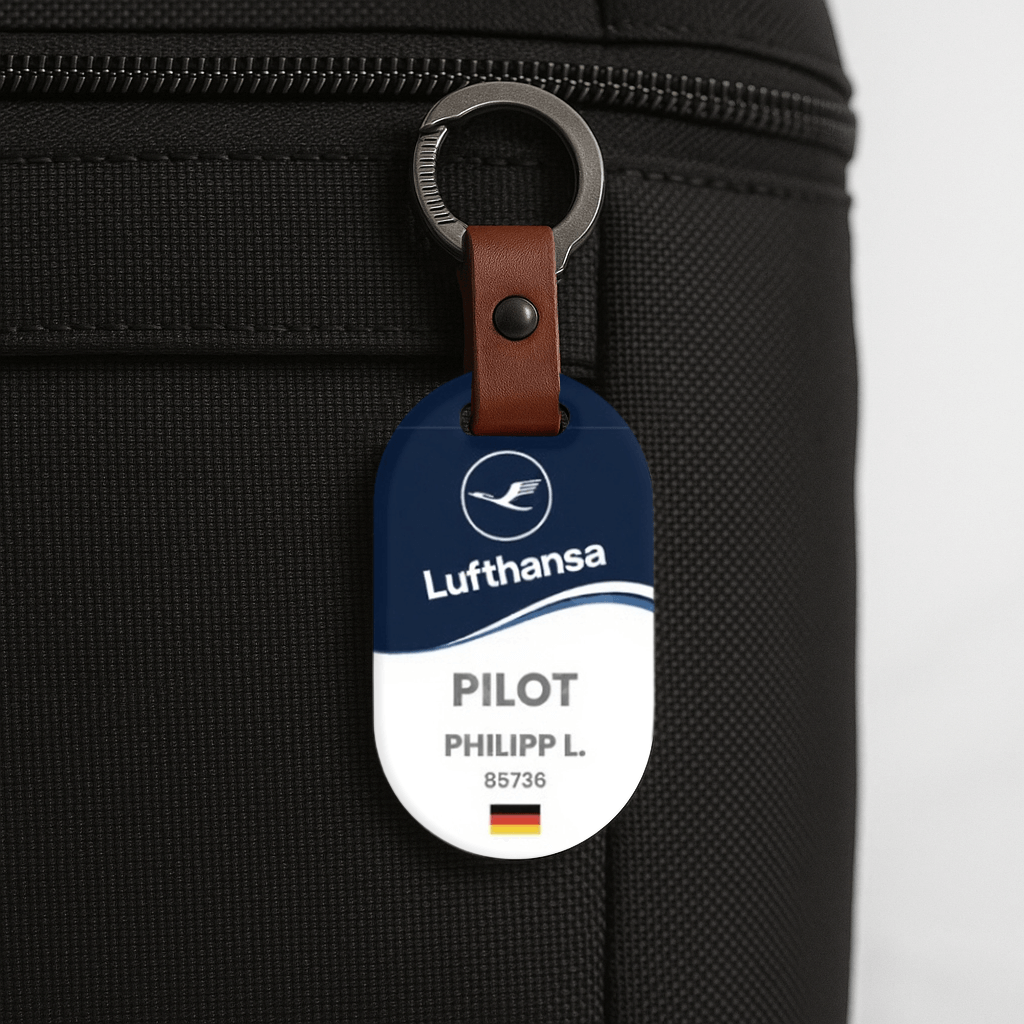
As a Lufthansa crew member, your schedule is demanding enough without the added stress of a lost or misplaced bag. Whether you are transitioning between flights across European hubs or navigating long-haul routes to intercontinental destinations, the modern smart luggage tag has become an essential piece of equipment for flight attendants and pilots alike. Unlike conventional tags that offer only visual identification, smart tracking technology built into today’s luggage tags gives crew members real-time location data, digital recovery pathways, and a much higher probability of reuniting with a bag before a critical flight departure.
How Smart Location Tracking Works for Crew Bags
Smart luggage tags leverage Bluetooth Low Energy (BLE) beacon technology to broadcast a signal that compatible apps on your smartphone can detect within a certain range. When you attach a smart beacon tag to your crew bag, the device continuously emits a low-energy signal that your paired app logs as a location checkpoint. If your bag moves beyond your immediate vicinity, the tag is detected by any other smartphone running the same app network, creating a crowd-sourced chain of location breadcrumbs.
For Lufthansa crew members operating out of major hubs like Frankfurt, Munich, or Hamburg, this crowdsourced detection network proves especially valuable. Thousands of travelers and airport staff with the same app active create a dense mesh of detection points throughout terminals, baggage handling areas, and ground transportation zones. When a crew bag goes missing in this environment, the smart beacon dramatically shortens the search window by pinpointing exactly when and where the bag left your possession.
The Practical Advantages of Digital Contact Features
Beyond raw location tracking, many smart luggage tags now include digital contact functionality. This means that whoever finds your bag can scan the tag and immediately access your contact details without needing to read physical writing, interpret handwriting, or locate a physical identification card. This seamless handoff removes friction from the lost-and-found process and dramatically increases the odds of a positive recovery outcome.
For crew members, this is not a theoretical benefit. A misplaced crew bag on a tight turnaround can mean the difference between making a flight and triggering a cascade of scheduling disruptions. Smart tags with digital contact features let Good Samaritans reach you directly, cutting through the normal bureaucratic channels of airport lost-and-found departments.
Beacon Tracking vs. QR Codes: Why Beacon Is the Better Primary Approach
It is worth addressing the distinction between beacon-based smart tags and QR-code-based systems, because the two are often conflated. QR codes are a passive technology: they require someone to deliberately scan the code, find a smartphone, aim the camera, and navigate to a link. In a busy airport environment with thousands of daily passengers, that level of deliberate effort is simply unrealistic for a stranger who finds an unattended bag.
Beacon technology, by contrast, operates automatically and silently in the background. No deliberate action is required from the finder. Their phone detects the signal, logs the location, and uploads it to the network without the finder needing to do anything. This passive, automatic detection is fundamentally more reliable for luggage recovery because it removes the human cooperation dependency that QR codes demand. QR codes remain useful as a supplementary contact mechanism, but they should not be the primary recovery strategy for crew bags that may travel through dozens of hands during a mishandled baggage incident.
Real-World Bag Return Scenarios for Lufthansa Crew
Consider a typical scenario: you arrive at the gate in Frankfurt after a long-haul from Singapore, but your crew bag did not make the same journey. Without a smart tag, you are filing a PIR (Property Irregularity Report) with the baggage services desk, filling out forms, and waiting while ground staff manually search conveyor systems and transfer belts. With a beacon-enabled smart tag, you open the app, see the last detected location of your bag somewhere in Terminal 2’s baggage sorting area, and can direct ground staff straight to it.
Alternatively, a passenger or airport employee in a different terminal picks up your bag and notices the smart tag. Their phone detects the beacon, the app recognizes the bag as out of your network, and you receive an instant notification with the finder’s approximate location. Within minutes, you have a direct line of communication to coordinate bag return, without having to navigate Lost and Found hierarchies.
Protecting Your Crew Bag Investment
Airline crew bags represent a significant investment, both monetary and functional. They are packed with flight documentation, personal effects, electronics, and items that are mission-critical to your daily operations. A lost bag is not just an inconvenience; it is a potential safety and operational issue. Smart luggage tags add a layer of protection that is disproportionately valuable relative to their modest cost, and for Lufthansa crew members who value reliability and peace of mind, they are fast becoming standard equipment.
If you are ready to upgrade your crew bag with smart tracking technology, browse Lufthansa crew luggage tags at the Aircrewtags shop and find the model that fits your route profile and operational needs.