
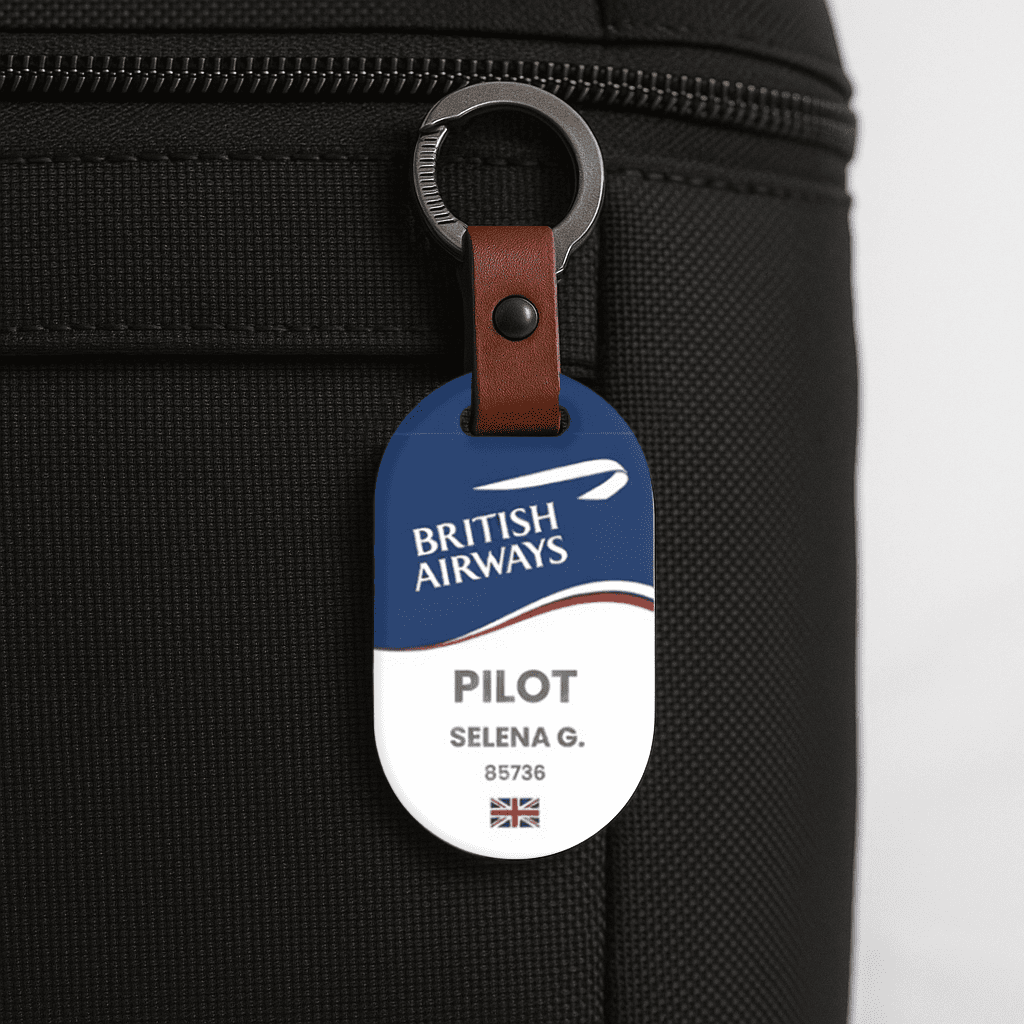
British Airways crew need smart lost-and-found luggage tags because airline work creates repeated movement, shared luggage environments, and a higher need for fast bag recovery. The value is not the mechanism alone, but the stronger recovery path after a bag is misplaced or mixed into a shared crew environment.
Why luggage identification matters
Crew members move through airports, hotels, crew transport, and shared workspaces where similar bags are common. A bag can pass through several handoff points in one duty cycle, which makes fast recognition and recovery more important.
What standard tags fail to solve
Standard luggage tags often fail to solve privacy, recovery speed, and contact-routing problems because they rely on visible printed information alone. A basic tag may separate one bag from another, but it does not always create an efficient recovery step after an item is found.
What makes a luggage tag smart?
A smart luggage tag supports recovery with scannable or digital contact mechanisms, clear bag identification, and a practical lost-and-found workflow. The technology matters less than the outcome, getting the right bag back quickly and safely.
Why this matters more for crew
Crew travel is repeated, time-sensitive, and operationally constrained. Small delays and bag confusion matter more because they interrupt movement in a workflow that already runs on schedules, handoffs, and location changes.
Best-fit British Airways options for smart recovery intent
- British Airways Smart Beacon Luggage Tag
- British Airways Boeing 777 Smart Luggage Tag
- British Airways Crew Luggage Tag for a simpler ID-first fallback
For the wider overview, see the British Airways Crew Tags Guide. To browse the full airline collection, visit the British Airways category page. For role-based choice, continue to the pilot and flight attendant comparison page.